
the cost with John Ray.
A Fayetteville faith leader on what it cost to open one door. John Ray of Vine & Branch Church on losing 90% of his congregation over women in ministry and LGBTQ inclusion, naming White Christian Nationalism in Northwest Arkansas, grief, and why he would do it again.
⚠️ Content Warning: This episode contains adult subject matter and other content that may be disturbing to listeners, including grief and personal loss. Listener discretion is advised.


episode notes.
John Ray landed in Elm Springs, Arkansas in 1988 for a one-year Youth With A Mission program he signed up for mostly to prove God was not real. He stayed. Almost four decades later he sits on the leadership team at Vine & Branch Church in Fayetteville, and he describes faith not as a conclusion you reach but as a practice you keep. Belong, become, believe. That is the order his church works in, and he has lived what that order costs.
In 2009 his youngest daughter was killed and everything he believed came down to the foundation. A Quaker seminary in Portland gave him something to rebuild with. Then, at the end of 2019, a leadership team split fifty fifty over the role of women in ministry and the inclusion of LGBTQ people looked at the most credentialed person in the room and told him to decide.
He did not want the decision. He made it anyway, and a friend had warned him what would follow. Thirty percent leave because they disagree, and that part is clean. Another thirty leave who agree with you but do not want the mess. It was closer to forty. Three hundred people became thirty. They sold the building, bought a smaller one closer to the most diverse part of Fayetteville, and moved worship to 4:30 on Sunday afternoons for people who work the brunch shift.
This conversation is about what that cost, and about the cultural force John names without flinching. White Christian nationalism, described not as an insult but as water, the thing you swim in and cannot see, the thing that makes your life easier the more you move with it. He talks about privilege, about the pastors he sits with who have reached the same conclusions and cannot afford to say so, about deconstruction that never gets to reconstruction, and about a redemptive theology that gives a person the backbone to name darkness out loud. He would do it again a thousand times.
about our guest.
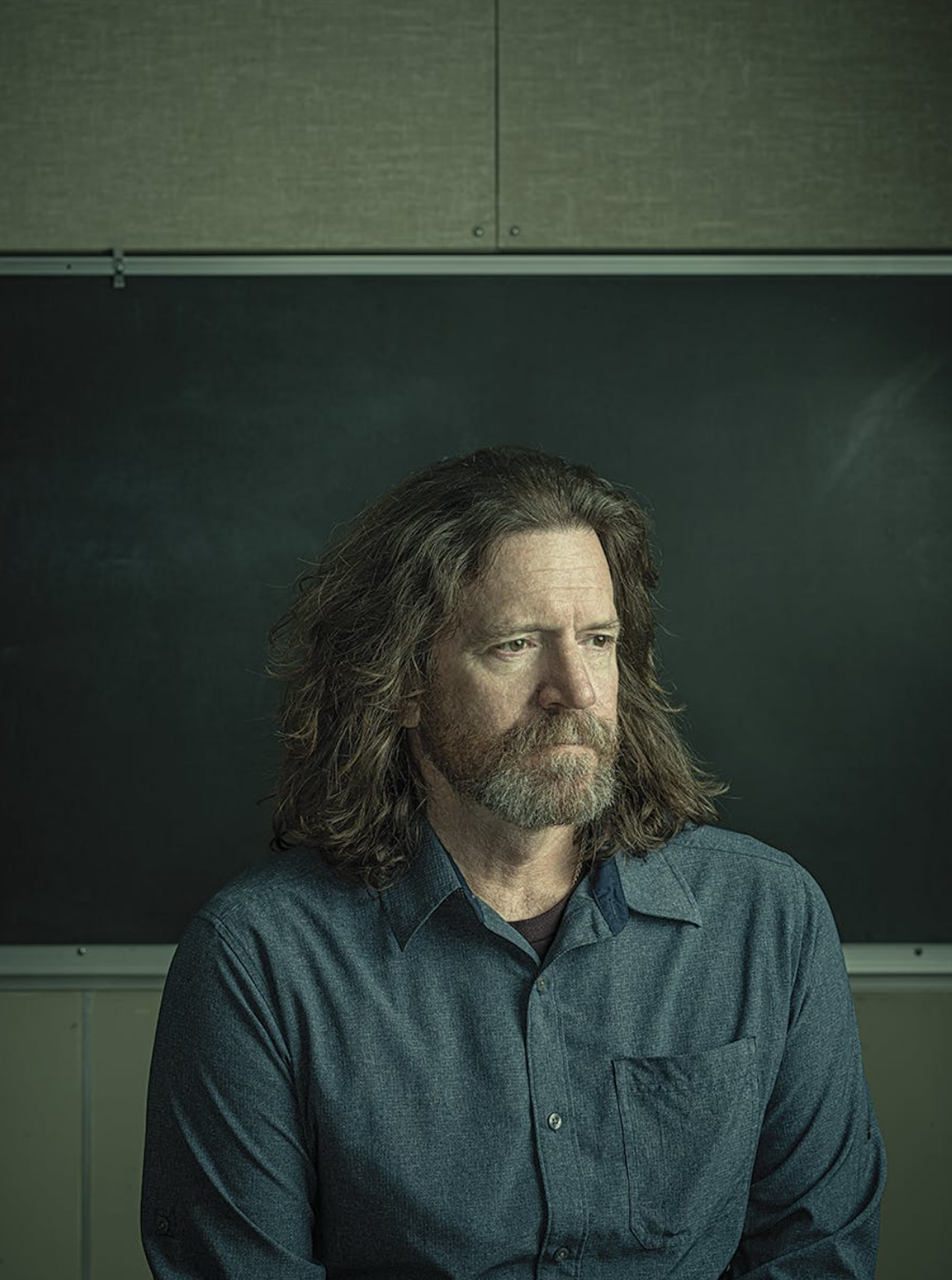
John Ray left Texas 1988 to "give God a year and see if He was real". He got a lot more than he bargained for. Since then he’s traveled to over 30 nations serving in a variety of capacities and with a number of different organizations.
John currently focuses on providing opportunities for spiritual formation as the Executive Director of The Abide Collective and helps provide leadership to Vine and Branch Church in Fayetteville. John has a Masters of Divinity with an emphasis in Spiritual Formation through George Fox Evangelical Seminary (now Portland Seminary).
John and his wife Jane were married in 1990 and have four daughters, Hope, Hannah, Naomi and Olivia. In October of 2009, their youngest daughter Olivia was tragically killed at a crosswalk a mile from their home in Fayetteville, Arkansas. Since then much of the Rays ministry efforts have been focused on various projects supported through Olivia’s Basket, a part of The Abide Collective.
Instagram: @raysaway @abide_collective
episode references.
- Vine & Branch Church: https://vineandbranch.church/
- Vine & Branch, Who We Are: https://vineandbranch.church/about/who-we-are/
- John Ray on the underview: https://www.theunderview.com/guests/the-underview-john-ray-abide-collective
- Portland Seminary at George Fox University, formerly George Fox Evangelical Seminary: https://www.georgefox.edu/seminary/index.html
- Makoto Fujimura: https://makotofujimura.com/about
- Simone Weil, Gravity and Grace
- Frederick Buechner
- Eugene Peterson
- John Prine, "Paradise," live recording.
episode outline.
- Content warning (00:00)
- Episode preview, a redemptive theology (00:17)
- Episode intro with Monica Kumar (01:58)
- Welcome, John Ray and Vine & Branch Church (03:44)
- Landing in Elm Springs in 1988, a country and western song (04:55)
- When faith became real, and faith as a practice (07:13)
- Belong, become, believe (07:32)
- Adoption, belonging, and the family of faith (11:47)
- Spiritual direction, walkabouts, and a safe place for dangerous questions (13:52)
- Faith without fear, the blast radius we carry inside us (16:47)
- Faith as pushing all the chips in (20:43)
- 2009, the death of his daughter, and a faith leveled to the foundation (22:22)
- A Quaker seminary, and adopting a flat model of leadership (22:22)
- The end of 2019, women in ministry and LGBTQ inclusion, and "you decide" (26:52)
- One door, and the 40 percent who did not want the mess (27:35)
- 300 people became 30, selling the building, and moving to 4:30 on Sundays (31:00)
- Defined by what you are for, not what you are against (34:06)
- White Christian nationalism as water (36:23)
- Patriarchy, exclusion, and a colony of life in a culture of death (39:24)
- "I didn't just drink the Kool-Aid, I sold it" (41:41)
- The cost, privilege, and the salary that made the decision possible (47:57)
- The pastors who cannot leave, usually secretly (51:00)
- Deconstruction that never reaches reconstruction (55:00)
- Dodgeball, and refusing to play the game (56:30)
- Practice is incremental, the effects are sudden (01:03:05)
- A redemptive theology, and the backbone to name darkness (01:07:28)
- Grace over gravity, Simone Weil (01:10:23)
- Would you walk through it again (01:13:59)
- Jump, and find someone to hold your hand (01:18:04)
- Fear, and the fear of not jumping (01:19:37)
- Wholeness, kintsugi, and Makoto Fujimura (01:21:20)
- John Prine, "Paradise," and the band still playing (01:22:47)
- Episode outro (01:24:43)
episode transcript.
episode content warning.
[00:00:00] mike rusch.: Before we begin, this episode contains adult subject matter and other content that may be disturbing to the listeners. The underview is committed to honest storytelling about our place, and sometimes that means sitting with hard things. Please take care of yourself as you listen.
episode preview.
[00:00:17] john ray.: In theological terms, I, I have a redemptive theology. How that plays out is that I don't believe that, the darkness wins. I don't believe that hatred wins. I don't believe that gets the last say. I believe that no matter what or how tragic the experience or the darkness, that, that love, that God will overcome that.
The crazy thing about that, Monica, is it actually gives you eyes to see how dark the darkness really is. Because if we don't believe that love, that God, will overcome that, we, we will not have the backbone, the strength to look darkness and call it what it is. And that's another thing that I see in our society, is we're afraid to call the darkness what it is because we really don't believe that love will overcome it.
episode intro.
[00:01:58] monica kumar.: This season on The Underview, we've been asking a question that seems to reveal more complexity the more we sit with it. What does it mean and maybe cost to belong to a faith tradition and a community? We sat with Pastor Gary Wheat, Pastor Dustin Barton, Shahid Sheikh, Robert Burns, Darrel Harvey, and many others.
Different traditions, different rooms, but the same undercurrent running through everything. Faith in Northwest Arkansas is not abstract. It's about us, our neighborhoods, and the people alongside with whom we are building our communities and our values.
Today we're sitting with John Ray, part of the leadership team at Vine and Branch Church in Fayetteville, and this conversation continues to go deeper and reveal more layers.
John talks about faith as something you belong to before you believe it. Belong, become, believe: that's the order his church works in, and he's lived the cost of that order. He walked his congregation through decisions about who's fully included and welcome, women in leadership, LGBTQ inclusion, and he's watched the church work their way through and out of these questions.
John reminds us that grappling with belonging isn't the soft pathway of faith. Sometimes it can be the costliest one. John talks about grief and about a redemptive theology that doesn't flinch from naming darkness, and what does it mean to yet find doors even when you can't see for the darkness? This isn't a conversation about being right.
It's a conversation about what we're willing to put on the table to build a potentially bigger table. I'm sure this episode will stay with you like it stayed with myself and Mike. Thank you for being here with us, and I'm particularly grateful to John for trusting us and igniting an emotionally visceral conversation.
Let's get into it
episode interview.
[00:03:44] Mike: , well, Monica and I have the privilege of sharing a table today with John Ray, who has been a friend of mine and it's been a privilege to be a friend of his for a very long time.
John is on the leadership team at Vine and Branch Church in Fayetteville. And he may not call himself this, but I would consider him a pastor who speaks to the soul. And so John, I'm just thankful to have you here. Welcome to this conversation.
[00:04:06] john ray.: Well, I'm really grateful. I've, you know, followed along since the very start of this podcast.
I think it does-- it is doing incredible things in our community, for our community, and I'm, I'm really, really kind of emotional to be here. Very grateful.
[00:04:22] mike rusch.: Well, and for those of you that remember, John, you joined me on a bike ride in season one where we try, I tried to keep up with you riding through the city of Fayetteville, but so you've, you've been a part of this conversation before, although maybe the context was a little bit different at the time. This season we're talking about the faith of Northwest Arkansas. And this has been part of your story since as long as you've been here.
And maybe we'll get to the kinda the, the meat of the story, if you will. But maybe start with your story and your background, how you end up in Fayetteville, Arkansas. And then we'd love to hear how your faith became real to you.
[00:04:55] john ray.: Yeah. I landed in Elm Springs, Arkansas in 1988 to be part of a program with what was then a youth of the mission base. I was in my early 20s, and I like to tell people that my life had kinda become a country and western song. Truck broke, dog died, girl left. I had, I had grown up in a Christian context in Austin, Texas. And never, never didn't consider myself a Christian but mid high school through college it was not integral to who I was or important.
And then like I said you know life has a way of getting your attention and so I thought I'll give this God thing a try. And Youth With A Mission had a program for a year and I thought well I'll go do that and see if it's real, see if it works.
Because I mean let's be honest if God's not real I got better things to do with my Sundays you know? Why go to hell in church too? I- it's just I've, I've got better things to do. If this is all, if this is all just make believe, if this is all just make up like hey great on you glad it works for you. And that's r- really I was kinda looking for a get out of jail free card. I was really like, "Hey look I can, I can show you that I did this for a year," and if it works for you great but, but it didn't work for me and I got other things to do.
Well that was 1988 and needless to say I had my script rewritten pretty seriously. Basically kicking and screaming I, I ended up staying up here and then I met my wife and then we got married. And then through all kinds of things that were going on in the world, the walls falling down in the former Soviet Union we started working internationally.
Then we started having kids and then you know all of sudden you've got a life. You've got a life and a place with things going on. And, and I had opportunities to go back to Texas but and they were very attractive but I just felt rooted here and, and I've continued to feel rooted in this area without ever since.
Now that journey has taken me even though it's been based out of northwest Arkansas, that journey's taken me some pretty significant places experientially geographically and theologically. So I don't even kind of know where to start with that.
when did faith become real.
[00:07:13] mike rusch.: Well maybe before we get there I mean I think the question we have for every pastor is really like eh you mentioned this a little bit but maybe I'd ask you to maybe lean into it a little more. Like when did, when did faith become real to you in the sense that it was not maybe in your head but may move to your heart?
[00:07:32] john ray.: This is not a copout answer but that's still in process I, I don't know that that's fully happened. And it's interesting you- we're having this conversation on this Friday because in two days as I teach at Vine & Branch Church, we're gonna be talking about the practice of faith.
And we approach it... and I, this is a reflection of my personal philosophy, is that faith is a practice. It's not an idealized concept that you ascent to, but it is actually something that, that you practice and that develops through practice. We've adopted a model at our church that I believe is reflective of more historical faith practices that starts with belonging rather than believing, that faith grows in an accepting community.
And so we, we talk at Vine & Branch about belong, become, believe, that belief is actually the outcome. It's not the starting point with that. And so I'm continuing to practice my faith, and I've had my faith, I've had that, that realization or the experience of faith. I've had, I've had numerous experiences where I felt it. Probably the majority of my life I don't feel it at all. I, I just don't, but I continue to practice it because I, I am believing that if I practice, that those emotions, those experiences will come as I l- as I attend to, to that part of reality, that part of God
[00:09:12] mike rusch.: john, I appreciate that because I, I think probably a lot of people listening, and, and I wouldn't excuse myself from that probably understand deeply what you mean by that. I, I'm curious when you felt maybe then, to use your language, what did it feel like or when did you know that faith was a place that you belonged?
[00:09:28] john ray.: How do you describe when you realize you need to breathe? Like, how do you describe when you first became conscious of the need for blood in your veins? I mean, I mean, it's always been there. It, it's always been there. I believe that all of us are created with this. Some, some people are much more aware of it, much more tuned.
Some people never are aware of it. I grew up in a Family that was surrounded by religious practices, cultural religious practice Southern Baptist in Texas. A mom who is i- very interested in religious things religious books, Christian books. But I, I... It, it's just always been there. And, and you know, you, you were joking earlier like when when did you get saved, right?
Like well, I don't know. I, I think I still am being saved. I, I have been, I am being, and I will be. I, I just see it as something that is dynamic, that is happening. And, and part of that to me is what faith means, is that faith is believing that that's what's happening in your life, that you are experiencing this this encounter with God.
And I have found that most vividly embodied in the person of Jesus. I, I call myself a, a Jesus follower. I'm a, I'm a disciple of Jesus because I understand and experience God most fully as I can understand it when I encountered Jesus with that. And that happens all the time. And then when I want it to happen when I wanna make it happen, it doesn't happen at all so
faith still in process.
[00:11:16] mike rusch.: When you think about faith, this idea of like you're still in process. I'm curious maybe where or how from your language do you feel like this experience of faith roots you and maybe its connection with place or its connection with your own story, your family's story, the story of this place?
Maybe where they kinda come together and align or don't align and, and maybe make the most sense to you
[00:11:47] john ray.: I mean, there's so much, there's so much that influences my story. I was adopted. I was a pre-Roe versus Wade baby, and in our culture we kinda don't understand what it was like before that. My parents weren't able to have kids. They basically went to the state of Texas, paid $250 and said, "We'd like a boy. It'd be great if he had red hair." Three months later they're like, "Come pick up your package." Yeah, it was just... I was there. And and so ... And I love my family that adopted me, and I've, I felt very welcomed and very much part of that.
But still that's framed my idea of belonging is adoption not natural birth with that. And in some ways I feel like like my natural family is faith family. Like that is, those are my people are people of faith which is in this current expression also of our current cultural moment within Christianity is, is also i- incredibly alienating because I come from a very evangelical fundamentalist background, Southern Baptist, and then worked with a very fundamentalist evangelical para-church organization for a number of years.
Some incredibly formative experiences through that, formative relationships. To where the place where I am now is, it-- I, I feel like there would be, there's a lot of divergence from that experience and that community, and I miss it. I miss it a lot. But I also love the community that I'm in with that. And so I feel the, I feel the family of faith very much akin to, I think, how people feel about their family of birth maybe with that? It's just there. It's, it's just part of me.
how faith shows up in your life.
[00:13:40] monica kumar.: John, can you share a little bit about or maybe lean more into how your faith shows up in the world for you right now and shows up in your family, a faith as you've shared?
[00:13:52] john ray.: So I am incredibly fortunate that I get to practice my faith also as part of my vocation. So I am part of the leadership team of a local church.
My wife and I also have a nonprofit that is centered around addressing systemic needs, critical needs of families in the world. And also, I, I take groups of people on walkabouts, and I create space and hold space for people to ask... I like to say I, I create a very safe place to ask very dangerous questions.
I'm a certified spiritual director. I-- One of the first things I usually do when I sit with a person or with a group of people, and you may have to bleep this out, but I, I say, "Your shit doesn't scare me." There's nothing that you've encountered or are encountering that that I probably haven't heard before or dealt with before, and your, your questions don't threaten me and what I believe with that.
Your doubts don't ... And I, and I'm not here... actually, I'm not here to, to allay your doubts. I'm not here to convince you one way or another. I'm just here to create space for you to unpack it, get it all out on the table, and look at it, and see what it is. And then I trust because I do... I think God is moving in the world.
I think God is moving in us, through us, among us. I think the Holy Spirit is this incredible dynamic force that is reconciling and healing and doing these things if we will let that spirit do that. And I get to do that as a vocation. I feel like, like I won the lottery and didn't buy a ticket. Like, I get to do this.
I get to sit with people asking what I believe are some of the most fundamentally important questions that a person can ask, and, and have time to do that in a world that doesn't want you to ask those questions.
So I'm probably not answering the question too well the way you want me to. You are
faith without fear.
[00:16:04] monica kumar.: So s- something that's coming up for me is just, you know, I'm re- I'm recently sort of marinating on this idea of the end times because of, of things that I've recently heard. I'm, I'm hearing a lot of conversation, and I'm feeling a lot of tension in the world around the, the, the nearness of fear and, and faith. And what you're talking about is freedom and faith. What you're talking about is putting, is being open, and honest, and not being fearful of putting all your shit on the table.
So can we, can you, can we, can you maybe talk a little bit about that or just, just share a little bit about that contrast that I'm hearing and feeling and seeing in the world right now?
[00:16:47] john ray.: I believe most people walk around this world Feeling like if they really let go all their fears, all their doubts, all their hurt, that it would be like a nuclear blast and it would kill everybody around them That they, they hold within themselves these experiences that they don't know how to give voice to, they don't know how to deal with, and that, and that they feel it so intensely they can't but help imagine that if they r- if people, other people really knew and they really let 'em go, that the blast radius would just wipe out everything around them
That weight inside a person leads a person, can lead people to just live really compromised lives and make them really vulnerable to manipulation of easy answers and political, religious, market manipulation. There's a, there's a verse in the Christian Bible that says, "The person that comes to God must believe that God is, and that God's good, and that God will reward the person that comes."
What freedom. Can you imagine a more freedom-inducing invitation than believing that if I go to this God, that this God is fundamentally good And that my search, my coming to this God will be rewarded in some way, shape, form I, and I, and I, I just think, I think most people, Christians, non-Christians, whatever, it, it, don't believe that.
They, they believe that God ultimately, if God really knew who I was, that I would be rejected, that I would be, that I would be punished, that I would be found wanting Studies have shown that every, every person that's adopted, whether they know it or not, and this is the fascinating thing about the stor- the, the study is they, they studied people who were adopted and didn't know they were adopted, and people that were adopted.
Almost all of them, all of us struggle with the fundamental question of will you reject me too? I think, I think all of humanity deals with that question. Will you reject me too? W- how far is too far? What do I have to... And, and then you turn that around, so, so then you start asking questions, "Well, what do I have to do not to be rejected? How do I, how do I perform in a way that I will not be rejected?"
And, I believe the message of Jesus was, you're not rejected. It's already done. You're already accepted. You're already in, and there's nothing you can do save from saying, "No, I don't want that." But otherwise, there's nothing you can do that will compromise that. To your point, that is a freeing faith. That is not a faith that generates fear. At least not fear of punishment or fear of rejection. Fear in the sense of awe, fear in the sense of Incredible relief. Incredible, yeah, that for sure, but, but not a fear of rejection or punishment with that,
active faith.
[00:20:20] mike rusch.: John, this is not a passive thing to you. No, no. I can... it feels like in the ... Just not weight in a bad way, but like weight like an anchor, right? That holds us in a place. It feels like when you talk about this, like this is... I don't know. It feels like an all or nothing kind of thing. Is that a, is that a fair characterization?
[00:20:43] john ray.: I- I, absolutely. I mean, I don't, I don't know any other way. You and I talked about this when we were talking about what we would... how today would look is, to me, the decision tree. You know, people have decision trees. Is, is, is pretty straightforward. Like, if, if you are all in on the faith, then there's a whole lot of decisions that are already made. Like, like that just decides a whole lot of decisions with that.
And I've often described faith. People ask me, "What is faith?" And I'm like, "Faith is taking all your chips and just pushing them in." And, and I, I got no plan B. I don't have another way of understanding my life of doing this. Do I do it perfectly? Hell no. Does it take constant practice and reminder? Absolutely with that, but I seek to live my life all in, no reservation, all the chips on the table as a follower of Jesus. Like that's ... And I, and I shudder to say that because I realize how fall- how far short I fall of that even as I say that aspirationally. The experience, I s- I still mess up. I still I'm still reaching in trying to put some ch-chips in back of my pocket holding them back, right? But but that's how I seek to live without
how does become real in a faith community.
[00:22:07] mike rusch.: I'd love to understand how this plays out itself in the church- Sure ... where you are today. Like, what is... Explain Vine and Branch, what it's rooted in, what it's grounded in.
How does this show up in your faith community? Yeah.
[00:22:22] john ray.: You know, I, I hesitate to speak on behalf of a group of people. We are... So I went to... Well, I'm gonna have to back up on part of my story. So so in 2009, our youngest daughter was killed
and everything changed.
I often talk to people who share this experience of feeling like a ghost when something like that happens. Because you watch people doing things, engaged in life, eating, drinking, driving, going to jobs, going to football games, doing stuff, and you're like, "I, I don't... Why? Why would you do that? Why, why would you do that? There's no meaning in that," because of the grief that you're feeling.
It took everything that I believed down to the leveled it. Now, fortunately I had some really good things to rebuild with, but it, it took everything down to the, to the foundation. And I ended up going to a a Quaker seminary. Even though I grew up Southern Baptist in Texas, I went to a Quaker seminary in the Pacific Northwest. Portland Seminary. It was George Fox Evangelical Seminary at the time.
And I tell people seminary didn't just save my faith, it, it saved my life. It gave me a group of people and it gave me things to think about and it gave me access to people who... And a g- and a group of people that, that allowed me to to hold my grief, to not have to rush through it, to not have to rationalize it, to not have to de- deny it or make sense of it, but just to be in it.
And it gave me a, it gave me a way, it gave me a practice, it gave me a way of believing, a way of attending to the world, a way of looking at things that took all of my previous experiences and didn't shun them in any way. It actually just reorganized them
And so m- because I was in leadership at the church We kinda had a concurrent journey of reexamining our faith, how we practice what we believe. Grace Church, Vine and Branch was started as Grace Church as a, not by Fellowship, but, but with the encouragement of Fellowship. So it was a, in a sense, a nondenominational Bible church founded on the cell celebration model. We came to a, we came to a cru- a crucial point before we lost our daughter where the founding pastor stepped away and the, the people that were left said, "We want to conscientiously adopt a very flat model of leadership."
That's why I, I say I'm not a pastor is because we have it very flat. We don't have a teaching pastor. We don't have a, we don't have a directional leader. We have a group of people that makes decisions together, and that was key in how we were able to change. And then right at right at the, And I say this that, that we had the freedom to do this 'cause when you, when you lose a child and you, and you go through what our family did, and by extension our church did, like, like peripheral stuff no longer really... you, you get free from having to fight superficial things. You can talk about deep things. You can deal with deep things.
And we came to a critical juncture at the end of 2019 over two issues which are very prominent in our society right now, which are, are the role of women in ministry and inclusion and affirmation of LGBTQ community. And the, the group, the leadership group had totally high centered, was, was you had... it was split 50/50 on this. And we thought, we thought, "Well, we're gonna add new people to the group, and then we'll make the decision with the new people." But what we found was, as we reached out to people to join the leadership group, they were like, "We're not joining until you decide."
Dang. That put us back where we were. And so ultimately, because I was the one, I was the most credentialed member of the, the committee. I'd just come out of seminary. I had my master's of divinity. I'm certified spiritual director. 25 years of Christian vocational ministry and a variety of experiences, ordination, all the things.
women in ministry.
[00:26:52] john ray.: They said, "You, John, get to make the decision." Well, crap. And because of the things, you know, who I am and what had happened in the way that I practice. The first thing on, on the issue of women in ministry, that was a no-brainer for me because it just is. You just... I, I had been in a variety of ministry experiences where women were fully operating in the offices and the functions that, that men operate in.
And I'm like, " Look, you can say it's not a duck. It's a duck." Like, it happens. They, that, that is a thing, is women not only can, should they or not, they are. They are leading. So let's just affirm what's happening here.
inclusion within the church.
[00:27:35] john ray.: And then on LBGT inclusion the way that I understand the gospel is there is just one door.
That Jesus didn't come out and say, "All you who wanna follow me, with the exception of this group over here." Now, that group over there, you gotta change, and then you can do... he's like, "Come."
One of the... I think one of the things especially Christians who grew up reading the Bible regularly miss is the novelty, the absolute craziness of Jesus calling his disciples, and they did not know what they were following.
They did not know. This was not... He does it before he's done any miracles. He does it- or, or very few. He does it before he started his teaching ministry, his public ministry. He's, he's inviting people to be part of a movement that they don't know what it's gonna be about. Now, they've got their ideas. They've got guesses. They've heard rumors, but they have no idea what they're getting into.
And I, I think the church is w- we're supposed to f- do the same thing as like, "Y'all come." Well, what are you about? Well, c- figure it out. Like, people ask all the time, "What do you believe?" Who are you as a church? What do you do? I'm like, look, I can tell you words, but really, the only way you're gonna know who we are is to just come be with us. And if you don't like that, great. I got it. I got it. We're not for everybody. As a matter of fact, we're, we're a pretty small group because our practice is so radically different than the normative Christian experience in northwest Arkansas right now.
Where we meet, how we meet, how we conduct ourselves is very different than the traditional cultural church in our context. And so on that issue, I didn't really come out as affirming or non-affirming anyway. I just said, "Look, we got one door. Everybody's welcome." W- If, if an issue around that comes up, we will decide together as a group and, um I had had a conversation with a friend who has a church in Austin who went through a similar experience, and she told me this. She said, "30% of your people are gonna leave 'cause they disagree, and that's gonna be clean because th- you know where they stand. Y- they're not... They're gonna tell you with that And she went on to say, "The thing that's, that, that is gonna be shocking is you're gonna have 30% of the people who actually agree with you who are gonna leave because they don't want the mess
And I was so, I mean, Monica, Mike, I was so naive. I thought, "Not us." I mean, I, I know the 30%. Like, I get it. I get the 30% who just can't go along, and bless them. I get it. Go in peace. But the others, we're, we're, we're gonna hold on. We're gonna do it. And I was right. It wasn't 30%. It was more like 40%. Of people who actually believed, or at least were open to the idea, hey, that the church can include this. But they didn't want the mess
They didn't want the stigma in our society of going to a church that was open and inclusive, and have to explain that to their coworkers, to their neighbors, to their parents. Of why the church would let gay people serve communion or be in leadership, or that you would have a married gay family with their kids, and their kids would be in your Sunday school with other kids and the whole thing.
Like they just... They just didn't ... They didn't want the mess. And it just about killed me
Being in leadership and knowing that I had made that, I had been charged to make the decision. I didn't want the decision. I'd been charged to make the decision. The decision that I made caused such fallout, i, I actually went through a season of clinical depression for about two years afterwards. That along with COVID, with some other things was It was devastating As a result of that, I can sit with people and say, "I can tell you, I can tell you a really good way to grow a church from 300 people to 30," which is effectively what we did.
You know, we had to sell our building and move and do a lot of things differently. And now we we practice our faith. We, we were able to sell the building and we, and we bought a much smaller building in a much more central location in Fayetteville which is what we, we wanted to be. We wanted to be proximate to the most diverse part of our community.
We meet at 4:30 on Sunday afternoons at a time because we realize there's a large segment of the population that just can't go to church Sunday mornings. I grew up in restaurant business. The, the worst thing you pull a shift Saturday night and especially if you're a bartender like I did for a long time, and to get up Sunday morning your only day off.
One it's e- it's either your only day off or two you're working Sunday brunch which is the historically the worst shift in the restaurant business. People coming after church are the worst tippers and the most ... They are the most demanding customers. It is notorious within the hospitality industry that working, working Sunday brunch after church is the worst shift of the week
And one of the reasons why we made the decision was it was like, "Hey, look, if you don't believe in these things, if you wanna have a, a, a patriarchal view of women in ministry, and you wanna have an exclusionary practice that you've really kinda got two doors that s- only certain people are qualified to be part of your church based on this," You've got 600 churches to go to in this area
I can name on one hand the churches I know that that are not denominational churches, Episcopalian or Lutheran or some Presbyterians that are in our space with that. So, so we just wanna be a church for those, those people. We wanna, we wanna that don't maybe not have a home anywhere else with that.
So yeah, then we, when we moved into the new building, we changed our name to Vine and Branch.
[00:33:44] mike rusch.: John, I think through this journey you made some decisions about as a church. And, and I wanna root this question in your idea of this idea we're gonna belong first, right? So that would be the framework which I carry into this question. But you made y- you made some decisions about what you would be maybe for, and maybe what you would be against. Is that a fair characterization?
[00:34:06] john ray.: Yeah, obviously w- our actions, our actions are the result of decisions we make, right? With that.. It's as I read the Christian Gospel, since I read the story of Jesus as much as I can, and, and I cannot read them objectively, nobody can, but within my subjective view of reading the Gospels, I see Jesus as this radically, this person who is personifying the heart of God through radical change and freedom And that is rooted in this idea of what God is for, not what God is against. And so we at Vine and Branch We take stands on issues, but it's not because we're not defined by what, what we're against. We're defined by what we're for.
And when you do that, ag- every decision you make is saying no to something. When you say yes to something, you're saying no to something else, right? But it's a, it's a very different posture to start from no than it is to start from yes. It's a very different posture to define yourself by what you're against versus what you're for And so we s- we try to develop and practice this beautiful idea of the kingdom of God as this place of radical inclusion, of, of incredible freedom, of healing.
And of course, there are things that are excluded from that experience that we have to take a stand against. But the posture of it and the experience of it is, is a very different way, I think, than what we see a lot in the world right now.
cultural influence of white christian nationalism.
[00:35:44] mike rusch.: I mean, John, what... During this time as you talk about making these decisions, maybe having hope in what the church would do, maybe not fully doing that or some people not, not fully doing that. I, I'm curious as you look back on that time, what do you think? What was the powers at play? What was happening? What was the... I don't know. It- I, I hear this conversation within the Church, but you also mentioned like people not wanting to deal with the mess of it, right? People not wanting to explain to their neighbors. I mean, now we're talking about like a outside cultural influence that's at play within this church. Yeah. Like- Is that fair? Is that fair at all?
[00:36:23] john ray.: Oh, absolutely. Like we, we are so, most of us are so unaware of the cultural forces that are constantly forming our decisions and within, within the American, 21st century American context, especially here in, in the American South, white Christian nationalism, and I know that's a, I know that's a, a loaded word and a loaded term.
I, I get that. I know that as soon as I say that, man, people start to buckle on the sword and pick up the shields, right? But I'm describing it almost in a, in a non-political way, but as a cultural way of, of moving through the world we live in a society, whether you are a Christian or not that is formed by white Christian nationalism.
There's, there's power there, that the more you align with that agenda in our society, consciously or unconsciously you will find your way easier or more difficult.
And that movement through the world and that is n- is rarely conscious. Rarely are we waking up in the morning saying, "Well today my agenda in order to be aligned with these things is this." No it's I will listen to this music, I will buy my goods from these stores, I work this kind of job, I will wear these kind of clothes, I will hang out with these kinda people, I will do these things.
And, and then i- the more you move with that dominant cultural force y- your life will be easier in general
Way that I understand Jesus is he is a, the great disruptor of those things. That Jesus came to, to expose and then overcome that kind of cultural force Because I would argue that that cultural force is ultimately destructive.
That's the one we're experiencing in our culture. There have been dominant cultural forces in, th- that exist in every society and every place throughout history that are destructive. The one Jesus was specifically dismantling in first century Palestine would look different in a lot of ways than white Christian nationalism here.
But I believe that Jesus is here to dismantle white Christian nationalism because it is, it is incredibly toxic, and it is incredibly destructive, And it leads to death, and Jesus wants us to have life
[00:39:03] mike rusch.: Okay, John. Th- I mean, I, I guess you're gonna have to help us walk through this a little bit because it sounds like some of the conversations that were at play within this church were around the role of women.
[00:39:16] john ray.: Sure.
[00:39:16] mike rusch.: The inclusion of of different types of people.
[00:39:19] john ray.: Sure.
[00:39:20] mike rusch.: Is that why... I mean, is it fair to frame those conversations?
[00:39:24] john ray.: I mean- Absolutely. White Christian nationalism exists to support patriarchy, to support gender inequality. Therefore, the issue of the full inclusion and empowerment of women is, is key to its identity. It's a cultural thing. The same with sexual mores around LBGTQ identity, gender identity with that. It but in a way, like That, those are just the tip of the iceberg issues. If... It's not like, hey, if we solve these two things, then everything's good. Those play out economically. Those play out environmentally. Those, those when you have excluded a group over here and empowered a group over here against the expense of this group, then you're gonna get a whole host of really bad outcomes, especially for people who are not- who don't fit within those cat- nicely within those categories.
Eugene Peterson called the Church "a colony of life among a culture of death." And that stuck with me a lot. In my, in my imagination of the church is that we were supposed to be this colony of life in a culture of death. White Christian nationalism is a, is a death cult. It's a death cult. now.
So back to the decision tree, I'm like, "What else am I gonna do?" If I say I'm a disciple of Jesus, the dude got crucified.
[00:40:50] monica kumar.: John, as I'm listening to you, I just, I think what, where, where I sit with a lot of fear is the insidiousness of white nationalism disguised itself as, as, as faith-
[00:41:04] john ray.: Sure
[00:41:04] monica kumar.: and religion.
[00:41:05] john ray.: Sure.
[00:41:05] monica kumar.: And and how, how do we see that, and how do we, how do we separate that? And how can we stand back enough to be able to, to be able to view that, you know, through that lens, especially if you're in it. Because every system you're moving inside is defined by something that as far as you're concerned is normal everyday life.
[00:41:27] john ray.: Self-evident.
[00:41:28] monica kumar.: Then exactly. You know, I have a friend who talks about, you know, there's two fish like swimming in the ocean, and one fish says to the other, you know, you know, oh, the older fish says, "Hey, how's the water?" And the fish look at each other and they're like, "What's water?"
[00:41:41] john ray.: Exactly. Exactly. No, that's... look, I, I say all this. I really don't wanna come off as some arrogant know-it-all asshole. I, I don't wanna do that because this is, I grew up in, in those waters. I, I didn't... Look, I didn't just drink the Kool-Aid, I sold it. This was my life. I believed that it was the answer. I sold everything and joined an organization to proselytize people into a system that was based on that. And I thought it was so good, which is, which is why I really try to adopt the posture of humility that I'm still learning I, I got no stones to throw because I was, I was there. That was me with that And I think a lot about your question. Well then how do you, how do you break out of that? I can tell you for me, the experiences that I had traveling internationally were profoundly affecting.
To see, because for good or for ill, as a small child in a Southern Baptist Church in Austin, Texas, when we sang Jesus Loves the Little Children, red and yellow, black and white, they are precious in his sight, I believed it. I still believe it. That might be the most, one of the most influential things that ever happened was Mrs. Scott , my Sunday school teacher, leading us in that song. I, I still believe that.
And so then when I would travel to different countries and I would see these disparities, and especially in the former Soviet Union right after the walls came down, I'm like, "Wait a minute. There's, this world is bigger and, and God is bigger than just a White Christian national god."
I wouldn't have used those terms then, but that's basically what I was brought to believe
Growing up in the restaurant business was another formative thing for me because what that did is it took me out of my social class. So the restaurant business in, especially in Texas, we had... I, I worked in the kitchen even though my family owned the restaurant, I worked in the kitchen with refugees from Vietnam and people who didn't have documentation coming from Mexico and Guatemala, and I learned bits and pieces of the language, and I learned their stories, and I saw the way they lived, and I'm like, " Man, I've..." Like, this is-- They live different than I do, and yet they are my friends.
So I had these friendships across socioeconomic lines. And then the catalyzing force was, was loss, was tragedy, was grief, and I don't... I, I wish there was another alternative to grief. With all my heart, I wish there was some way that, that we could vicariously learn the lessons that we need through someone else's grief and not have to experience it ourselves And if someone listening to this podcast has that way, please get in contact with me and tell me how to do that 'cause I've never seen it.
Now, that doesn't mean you have to lose a child or go through a divorce or have a disease. Like, like the human experience carries with it enough trauma, and I believe the truly, the truly blessed people are the ones who can deal with the trauma that they have and learn the lesson quickly without having to have it hammered into...
I, I had to have it hammered into me. I'm just not that smart. I'm not that quick. I literally had to have the worst thing imaginable happen for then those things to catalyze with that. And you can't market that. I cannot monetize that.
This is what, This is why I believe, one of the reasons why I believe the American church has gone so far off the rails is 'cause they have come up with a substitute to the gospel that they can market Mm-hmm. They've come up with a substitute to all the things I just talked about that they can monetize and they don't even know they're doing it And you got good people trapped in a system that is actually promoting the very thing that the founder of the religion, Jesus Christ, came to destroy. They are practicing the opposite of it. And I-- and again, I say that with all humility because I, I, I did that- Yeah and I believed it wholeheartedly. So ... And, and it wasn't because I just had an aha moment one day or I studied myself out of that. It had to be ripped from me
[00:46:39] mike rusch.: John, I mean, as I listen to you, it, it feels like this power dynamic between what's happening in a church, what's happening in our culture maybe without you seeing it until it had happened, is just like, is, I don't know if it's fair to say, is at war with each other.
[00:46:57] john ray.: Sure.
the cost.
[00:46:58] mike rusch.: And, and I'm curious from like inside of that experience of going through and having to navigate through that, there's a tremendous cost for this.
You walk through your, your faith community, the people that have stayed. Is, is that a fair statement? I mean, is this, is this the cost of what it looks like to be faithful to what you believe? Or is this the, is this the cost of not aligning with the predominant culture? Is this the fear that's generated from a, a, a sort of boundary that, that we don't know how to cross, or we, we don't understand how maybe theologically this thing plays out? I, I ... It feels like there's all these competing forces that are converging into these spaces. And you're either on the right side or you're on the wrong side And it sounds like you were culturally maybe on the wrong side, and this is what happens. Is this the cost of that?
[00:47:57] john ray.: It's a weird pl- I'm in a weird place. I am a straight white male, able-bodied, well-educated, of a certain stature I cannot get rid of that privilege in this society. I, I have a lot of conversations with my wife right now because she let her hair go gray, and she's like, "It's like putting on an invisibility cloak." She goes, "As soon as I let my hair grow gray, I'm invisible to most people with that." I realize that when I walk down the street, I get very specific reactions from very specific groups.
If, if there is a, a, a woman alone and, and I'm out on the trail a lot walking or riding my bike, I, I am not a safe thing that's approaching with that. Other dudes, no problem. I even see people that might be threatening to other people, I'm not threatened by them with that. So in some ways I, I, I still benefit from this society. I still benefit from this system. But to your question of what does it cost you? Well, again, like, it's not rocket science. We've tried to explain it away a thousand different ways with our, with our current church theologies and stuff, but Jesus says, "You follow me, you're, you're gonna give it all up." You have to let go of that.
You have to be at least willing to, to lose it all. And and I just think it's a question, do we take that serious or not? The current church as I see it being practiced in most churches in America right now is not. It's come here and we will pimp your life Jesus is here to pimp your life. Set you free from a few bad habits, but basically set you up. You're gonna be on top. You're gonna be the cultural dominant top, top of the, top of the group with this." I can't think of anything more antithetical to the actual experience that Jesus himself experienced and his followers experienced throughout most of church history, at least until the Constantinian compromise.
The choice is not are we gonna sacrifice or not. The q- the choice is are we gonna follow Jesus or not? 'Cause I think if we do, I think if we really seriously do, and we seek to do it without, without making it try to fit within our current power structure is, it's, it's gonna cost you stuff with that. And look, th- I, I need to say this too. The reason why I was able to do this at my church is because it's, I don't receive my, my salary from the church. When we went to a flat model, I have another job that provides the majority of my income
If my whole salary had been based, I don't know that I would've made that decision And I say that to my shame, but I just have to be honest with you. I, I had the freedom to make that because I knew if the church ended, I would survive. I would be okay. If you're in Christian vocational ministry in America, and I've listened to the podcast of, of all the people you interviewed with, if they were to make the same decisions, they would be out of a job.
And if you'd been in Christian vocational ministry for 10, 20, 30 years, there's not a lot ... You're not gonna walk into a similar job and pay your bills. And when I, when I go into Walmart and I put my things on the, on the conveyor belt they don't look at me and go, "Oh you're the dude that builds houses for people make... you know what? Just take that for free." I don't pay my mortgage with good intentions by saying, hey I- I do these g-... Like no, I gotta use money. And because I had this other source of income I had the freedom to do that. So when I ... I again, I got no stones to throw. I, I have sat as a spiritual director with a number of people who are on staff w- on churches in this area who struggle, who are crushed by the weight of being part of something that they come to realization this is not working and yet they cannot leave it because their, their very livelihood is dependent on them staying within the strictures of how that's expressed in that church
[00:52:21] monica kumar.: And I would say that maybe that also extends to people in the pews too.
[00:52:27] john ray.: Sure.
[00:52:28] monica kumar.: Because I think that, you know, if what was being sold was ... is so wonderful in reality, you'd see a hell of a lot more happier people.
[00:52:36] john ray.: Absolutely. Absolutely.
[00:52:38] monica kumar.: And somehow it's the happiness that's being promised through the sales, i- i- it's not manifesting.
[00:52:45] john ray.: No. Nope.
[00:52:46] monica kumar.: I'm always thinking when we say, "What are we giving up?" I also do question like, what do we gain when we move away and we move into community and we move into inc-, you know, inclusive spaces and make friends with people and love with people who perhaps are not, accepted by others?
I, We, we gain more than you can ever buy.
[00:53:07] john ray.: Absolutely. And that's the thing. That, that's another one of the kind of the promises. You know, I was brought up in a culture that talked all about the promises of God. Well, one of the promises is, you know what? What you're gonna find is life. That even if you die, you will find life.
As a matter of fact, you have to die to find this life. So, so the last thing I want anybody listening to this to think is like, oh, whoa, you know, poor John. Look at w- you know, his church went from, you know, shrank dramatically and, and he's kind of on the outs with this group or this organization or whate-
Like listen
I'm sorry. What I have gained is, is worth it 10 times over. I, I'm, I'm good. Has it been uncomfortable? Yeah. Yeah. Yeah. Has it been heartbreaking? Yes. Have I doubted that I've made the right choice? Daily But man, would I go back? Hell no not at all.
My wife and I talk a lot about when we were encountering some of these changes and stuff, the, the thing that we would repeat kind of, kind of became a mantra to us was, "Don't miss the lesson." Like, don't suffer all this and miss the lesson, right? If you're gonna pay the price, get the prize. Yeah. And I wouldn't go back for anything.
Our, our little church is so precious to me, and it's, and it's full of people that have been excluded from other churches and, and are still trying to figure it out. And, and you know, look, it's messy. It's messy because what a lot of people don't know is when someone's set free from a certain construct or a
An abusive marriage or a constricting belief system, or anything is that yeah there's this incredible happiness that you're out of it. But there's also a whole host of associated things of anger at what was taken from you, of grief of what should have been that wasn't there. And so we find equally in our church not just people coming and saying, "This is incredible!
We lo- I love this," but also real red hot anger at what should have been, of what they lost, of what was taken from them by that false system that they were indoctrinated into
And some people never get past that. Actually, some people come and they get angry, and they just cannot get past the anger, and they leave. You know, deconstruction is this super hip word in our society today, and , I spend a lot of time with people who are deconstructing or say they have deconstructed. And what breaks my heart is that the majority of the people never get past to reconstructing, is they just stay there. They stay in the deconstruction. They stay in the anger. They stay in the pain, and they do not reconstruct. And they think it's all hip and cool and look at me, I'm not ... And they-- And th- they just change one fundamentalism for another fundamentalism.
I don't consider myself on one side or the other of this kind of cultural divide. I believe the kingdom of God is a different game altogether. And whether you're - ultra conservative or ultra progressive, those are just two different forms of fundamentalism as I understand them. And, and it's not like, "Oh, John used to be conservative and now he's progressive." I understand why people would say that, but really what I'm trying to do is I'm out of the game. I'm not playing the game at all anymore. There's something else that is over here that I think we're supposed to be part of. But that's really hard. You know, I had this image come to me a while back of like, I'm in a, I'm in a I'm in a school gym, and it's dodgeball is being played, and I'm like, "Hey, I'm not playing.
I'm not playing," but balls are zingin', right? And I'm like, "Guys, guys, I'm not playin'." And then you just take one in the ear, right? And you're like, "Well, crap." Okay, at least... So I'm gonna go over to this side so that I don't have to defend myself from 360 degrees. So I'm gonna go over to this side, but I'm not gonna throw the ball.
I'm not gonna be in the game. I'm just gonna stand on this side so I only have to watch from one side. Well, that works, and then you take one in the nose. And as soon as you take one in the nose, you're like, "Give me a ball." It's just as visceral, and you wanna throwback so bad, and then you're just back in the game, and you're caught in the game, and you're just.
I don't want to be part of that game, so
[00:58:04] mike rusch.: John, you, you guys walk through this journey, right? And I hear you say that you are meeting with other people that are in full-time vocational ministry who are maybe having some of the same questions.
[00:58:18] john ray.: Usually secretly.
[00:58:19] mike rusch.: Secretly. I can understand why. But the cost there n-not only have you walked through that, but you're saying that the cost is even greater.
[00:58:27] john ray.: Yeah.
[00:58:29] mike rusch.: I mean, is this, is this an undercurrent that you see? Is it a small, like, trickle? Do you... I'm trying to maybe understand, like, is this a story that's unique to your church, to your story? Or is this kind of like the, the water behind the dam that maybe exists in a broader context? I don't know how to judge that or understand that.
[00:58:54] john ray.: Well, I think the worst thing that could happen is that we have this massive shift and the, and the dominant expression of Christianity in America goes from being conservative to liberal That would be tragic because it's, it's just like I talked about with someone being deconstructing, is you just change one form of fundamentalism for another with that.
Now, do I believe there are certain... There, there are definite cultural effects that would be great for certain groups and very negative for others, but it would still be the same game with that
Jesus himself just used metaphors when he talked about the kingdom of God. He said it's like this seed that you plant and then it grows into the biggest tree. And he, and he, he's like, it, it's these different things. Like there's no The imagination that it takes to actually experience and attend to the world in a way free of cultural dominance of any kind other than what Jesus calls the Kingdom of God, which he describes in metaphorical terms but is expressed in certain behaviors of love, joy, peace, kindness, gentleness, self-control, all these things.
We don't e- we don't even yet have a language for that as human beings, and I think that's the task of the church, is to demonstrate that in some way, shape, or form Going back to Peterson's statement of it's, it's a colony of life and a culture of death. Like, we have to learn by practice how to embody this, this forming imagination that Jesus gives us
Is that happening in any degree with any kind of momentum? I have zero idea, mike. I just know it's ... It was started 2000 years ago. Somehow it has survived to this point. I have experienced it being practiced within small communities in Belarus, in India, in Honduras, in Mexico, in the United States.
Some called themselves Christians, some didn't call themselves Christians but, but it was the thing in And to me, what else am I gonna do with my life?
Like, that's That's the coolest thing ever, and I get to be part of that. So whether it grows or diminishes, that's not up to me. And whether it is growing or diminishing, I got... I'm one single dude in Northwest Arkansas. Man, I got no idea if it's growing or not.
I hear a hunger for it in people, almost a universal hunger for it. But I'm also very, very well of the obstacles that keep people from acting on that, keep people from experiencing that, keep people from pursuing that. I get it.
And I believe the church is supposed to be the place, our experience of church, is where we can take those burdens off and at least talk about and dream together of what the kingdom of God would look like if it actually came among us, if we actually lived into it
[01:02:07] mike rusch.: Maybe I keep going back just 'cause I think I'm still trying to get my head around this a bit. Like, I mean, it- w- we're talking about your personal experience, right? And, I mean, throughout the season we've been talking about how does faith, , work itself out into the world, right? How does what happens on Sunday, how does that become, you know, our lived experiences or the cultural forces, for lack of better words, that we have to deal with on Monday, right?
And so if this is not a unique experience just to you or to your faith community, that this is a, this is a cultural context, a cultural framework, cultural power if you wanna use that word, that is happening. I think I'm trying to understand how this works itself out into the world.
And so from, from your perspective, like, a- as you look around, just say Northwest Arkansas, how does this yeah, I don't know if you want to call it an ideology, if you want to call it a belief system. Like, how does it work itself out into the world from your perspective
[01:03:05] john ray.: Change is never in-incremental. Our practice is incremental Our practices are incremental. We do little things every day with repetition. I loved a, a pastor at church that had a, one of those reader boards out there, and it said, it said, "Things get easier with practice. Be careful what you practice." Practice is incremental, but the effects are often sudden with that
My hope is that the practical, the way we experience this is, is that we continue to - cultivate an imagination of flourishing. We continue to cultivate an imagination not because it's contra White Christian nationalism, but because it is in it of itself this beautiful thing. It stands in opposition and in judgment and critique of White Christian nationalism because that's, that's not what this is. We didn't come up with it to fight that. No, this existed first. So we create this imagination. We practice these things. We do the small things of taking meals to people that are sick and making sure people have their bills paid and, and making sure kids have a safe place to come and sing songs and be goofy and, and when
I watch the 18-month-old kid come and take communion on Sunday and try to grab two or three pieces of communion bread, right? I'm like, "Yes! That's what I want." I want everybody who comes to church like give me more Jesus. Give me more of this. Like I want more. And then we pray and we wait for the shit to hit the fan and, and that formative tragic experience, either in an individual or in a culture happen, And we hopefully be there to heal and to bind up and to, sit in the ashes with the people because
Look, I believe white Christian nationalism's gonna collapse just like every other empire has, every other ideology has throughout history i'm not gonna escape that, the repercussions of it, because I don't believe in it. Gonna be just as bad for me, my family, my kids, ' cause I'm part of this culture. What I hope is that whatever comes next, whatever comes out of that that we can be there to offer something better once people realize what they were engaged in was so toxic and terrible.
When that's gonna come, how that's gonna come, I have zero idea. End of times, I don't know. I have zero idea. And anybody that can tell you they're, they know, they're just selling something. They're just selling something. Nobody knows
[01:05:57] monica kumar.: And I think for me it's always important to remember that I'm a part of so many beautiful things every day of my life. And that doesn't stop. The, the books don't stop, the podcast don't stop, the art doesn't stop, the music doesn't stop, my friendships don't stop. So I, I, I find like I'm never a binary person. I'm always very ... I, I believe that, like I believe in God and I believe in faith, and I believe most of anything I believe in love. And I think that love is always finding a way to seep through the cracks all the time.
And you know, and as there's this, as there's this negative force or you know, White nationalism like you know, casting a shadow, I, I see love as a mountain that just can't be moved, you know? And, and it's just continually growing, and I feel it in my life every day. So yeah, I, I think that I see more people awakening to that. I think that it does take, like for me, you know what you said John resonates so deeply because I, I had to experience incredible deep darkness for years and years and years. And that's when I found my faith. And that's what got me through it, and then also what gave me life afterwards- Yeah ... and what brought love into my life. And so I do think that even, darkness plays a role in really like showing how beautiful and how much light there is in our world.
a redemptive theology.
[01:07:28] john ray.: In theological terms, I, I have a redemptive theology How that plays out is that I don't believe that, I don't believe that the darkness wins. I don't believe that hatred wins. I don't believe that gets the last say. I believe that no matter what or how tragic the experience or the darkness, that, that love, that God will overcome that the crazy thing about that, Monica, is it actually gives you eyes to see how dark the darkness really is.
Because if we don't believe that love, that God will overcome that, we, we will not have the backbone, the strength to look darkness and call it what it is. And that's another thing that I see in our society, is we're afraid to call the darkness what it is- because we really don't believe that love will overcome it.
We really don't believe that, that, that we can have a life that flourishes. We believe if we name the darkness, if we call out the crap, if we call out this systemic abuse, if we call out the racism, if we call out these things, that they'll win.
[01:08:34] monica kumar.: That our, our side or whatever it is, is really not strong enough to overcome that. And so we walk in fear to it. We kowtow to it. We minimize it. We, we stay away from it. Something else you said, I'm still thinking about a lot which was, you know, that you're, you're always walking with humility. And I think for me, one of the things I have been called out a little bit on this podcast is around, like not confronting some opinions enough, or not leaning into them strongly. And I think for me, another thing that I walk with that I ne- that just doesn't leave me, is there but for the grace of God.
Because I truly believe that I could be just as awful a person as I like to believe I'm as good a person. And I know it because I see myself in action. I know who I am. I know the things that I do on a daily basis.
I look back on my life and I, and I put a lens to it and I think well, you know, was that truly honest? Was that good? Did you make the absolute right choice? Sometimes yes, sometimes no. And so I think for me, as, as I'm walking through , and walking through this world and really like despairing with where we are today, and my heart is breaking for so many people.
I also do look at people that I think, "Oh god, I wish you, I wish you could open your eyes. I wish you would do better. I wish you wouldn't follow this awful like racist misogynistic rhetoric." There's another part of me that sits very much alongside that and says, "Thank God for," you know, "there but for the grace of God-" Sure
day for me in this moment" Yeah. But I can't say that every moment, you know?
[01:10:23] john ray.: I can look at experience, formative exper- Mike, back to your question, you know, how did I get here? I can look at the experiences and stuff, but I had zero control over those things. I did not choose those things. They happened to me I know people that have had very similar experiences, that have lived their life in very different response to those things.
I don't know why I chose the way that I did. I'm not I'm not a Calvinist by any means, but there is a part of me... I think there is a part of reality where you just go, "In some ways, there's stuff that's chosen for us that we just don't have any control over." And, and so for me to somehow take credit for that?
I, I heard someone say one time, " The person that acts with love can love the person that hates them. The person that's operating from hate cannot love the person that loves them. And that's why I understand the binary in certain things, but I do not believe in the binary of good and evil I, I believe that, that good overcomes, that good wins, that love wins.
There's a, a philosopher, theologian, I don't even know how she would've thought of herself, Simone Weil. She was a Jewish woman, French, 100 years ago. She wrote, "There's only two, there's only two forces in the universe, gravity and grace." And grace w-wins over gravity. And that's, that's what I believe. I believe grace wins.
I believe grace overcomes gravity with that. I understand the concept of karma, and in a lot of ways I believe karma operates in certain ways. Mm. But my personal belief and practice is that grace overcomes karma. Grace trumps karma. Because if I was, if I was just to be judged on the... If you were to put my life in the scales, good versus bad, outwardly someone may say, "Well, the good's gonna outweigh the bad."
Inwardly, I know It's not a contest which way those tails, scales are gonna tip. Like I, I, I plead grace, not character, not good choices, not anything. I plead grace in w- in everything. And so I... If I'm gonna plead that for myself, I have to be able to extend that to other people even though I ... it, it kills me the choices that I see them making. And I may have to put up boundaries to keep them from harming themselves or others or me. I still am not going to condemn them or judge them.
the cost.
[01:13:13] mike rusch.: I mean, I think John, you know, we've kind of walked down a road that we've not walked down before, I think in this conversation, right? Of trying to understand kind of how a faith community operates or thinks or sees about its, about its place. Right? But the internal conversations that you've had and the internal things that your, your faith communities had to walk through it's kinda puts you at the intersection of these cultural forces.
And I think it's fair to say from listening to you that it's put you on the outside of those. Right? Yeah. And yet as I listen to you, I can't help but say there is a great conviction and a great hope. Like I, I think my question is, is like would you walk th- through this again? Would you do it again?
[01:13:59] john ray.: A thousand times
What I have come to experience of God and of the church and of grace through that experience
I don't wanna go back to the... Before I had that I don't wanna lose that. I don't know how to reconcile that. I, I don't know how to put that in words that makes sense. I don't know how to make the math add up with that. , I shudder at the things that I believed at one point in my life and the way I practiced that. But if that's what it took for me to get to where I am, then I accept that.
And that person is still part of me, right? And it, and we've touched on it a number of times in this conversation, like I'm, I, I won the lottery and didn't buy a ticket. I've experienced more life, more love, more beauty
Floating the Yellowstone River catching rainbow trout. Sitting on the beach of the Pacific Ocean and watching the sunset. Yesterday I celebrated 36 years of marriage to Jane, this human being who is probably more responsible for who I am right now than any other person on this planet. I get to be her husband Who am I to get to do that? I sure as hell didn't earn that.
My kids are brilliant. I, I say that as a parent. But they are creative, they're artists, and they're intuitive, and they're... and, and my other daughters are just these vibrant, incredible human beings who are doing, who are living these fascinating lives to me I don't deserve that I'm... If I were to die walking out of this door right now, I am so far in the black. I mean, it's embarrassing how good my life has been, even with everything that's happened Well, how am I not to extend grace to other people?
How am I not to, to somehow use even a little bit of that so that other people can share that experience of flourishing, of goodness with that? I would have to be a monster to try to hold that and keep other people from somehow experiencing that, to tell other people they can't have that. You- "That's not for you."
How insidious would that be for me to say because of your gender or your sexual orientation or your nationality or your physical ability or something, you don't get that. That's not for you That's demonic. End times, there's a term, the Antichrist. That's the Antichrist. That is anti-Christian
Sorry, I started preaching there a little bit, so.
[01:16:50] mike rusch.: John, I, I mean, yeah, you, you are gonna be who you are and bleed hope over all of us.
I think, Monica, we're gonna have to maybe go back to the drawing board a little bit here and, like, recalibrate how these conversations are gonna go because now I have some other questions about what's happening in our community and our culture about
[01:17:12] monica kumar.: Yeah
[01:17:12] mike rusch.: the, I say forces or the cultural context-
[01:17:16] monica kumar.: Mm-hmm ...
[01:17:16] mike rusch.: maybe that, that as we've gone down this road this season, we've run into some things that we've not really shared with a lot of people.
[01:17:24] monica kumar.: Absolutely .
[01:17:24] mike rusch.: Feedback from listeners and-
[01:17:26] monica kumar.: Yes ...
[01:17:27] mike rusch.: invitations that have been turned down.
[01:17:31] monica kumar.: Well, I was going to say, yes, some that have been declined. Kindly declined.
[01:17:36] mike rusch.: And I guess, John, and, and now I hear you talk about from the inside of these conversations being at this crossroads and having conversations with maybe other faith leaders. Maybe for somebody listening today, what would you say to someone maybe that may find themselves maybe where you have been or the road that you've walked, especially from within side of a church and a faith tradition- Hm uh, and maybe we're holding onto something that we shouldn't hold on to anymore?
[01:18:04] john ray.: So we did this program with kids during the summer, and we ended every day at a watering hole. And we went out to this one watering hole, and it's got this jump off a cliff. I say a cliff. It's five feet above the water. But these are young kids, and it's usually a first experience of doing something exciting like that, and you got certain kids that just get up there and they go And then, and then there, there was this one kid, and he's like, "I wanna do it, but I'm scared. Will you go with me?" And I'm like... So I went up there with him, and I go, "Are you ready?" And he goes, "Will you hold my hand while I do it?" And I mean, it's like the best thing you can be asked. I'm like, "Yes." I have this picture of jumping off this rock with this, with this kid holding hands. I'm like, jump. My, my thing is jump.
I'll hold your hand. Find someone to hold your hand. Jump. Yeah, it's gonna cost you everything. It, it very well may cost you your job, your friends, your family. Jump. Do it. Jesus was worth it. Kingdom of God is worth it. Flourishing is worth it. Grace is worth it. Love is worth it. It, it will suck, and it will be beautiful.
One of my favorite theologians, a guy named Frederick Buechner, he says, " Terrible and beautiful things will happen to you. Don't be afraid." Like terrible and beautiful things will happen. Don't be afraid. Do it. The world needs, the world needs you to jump, jump.
fear.
[01:19:25] mike rusch.: Well, I, I can't let you go without asking our two questions that you're very familiar with. You're saying not be afraid. Don't be afraid. Jump. What are you afraid of? What, where does that fear sit today, John?
[01:19:37] john ray.: Right. What is it?
Because of the, the constrictures of language don't be afraid of the jump. Be afraid of not jumping. I am afraid that, I am afraid every day that people are gonna give up that people are just gonna settle And, and this is the insidiousness of any dominant cultural force is that it promises if you just go along, if you don't make waves, I'll take care of you. And usually it fulfills the promise. It does that. If you just keep your nose clean, stay in your lane, you'll get what you need
I fear every day people, they look at the cost. They don't have an imagination for what's on the other side, and They can't do it. They just can't do it. They can't give up what they've got. And I, and I look at my own self, 'cause I ask myself that question: Am I settling? Am I not-- am I compromising? Am I going along just to get along?
'Cause I get tired. I'm just a human being. I get ornery, and cranky, and selfish, and hurt, and I feel alone at times, and I'm like -- and I convince myself it's just not worth it. Just go along. And I fear that for myself, I fear that for my people I love, I fear that for our culture, is that we're just gonna sit back and let it happen and not fight it And take your wrench and stick it in the freaking gear.
wholeness.
[01:21:20] monica kumar.: And then our final question, John, what does wholeness mean to you?
You talked about art, so one of my most influential artists, I hesitate to say favorite 'cause that sounds like you're making judgment, but influential artist in my life is a guy named Makoto Fujimura. I don't know if you're familiar with his work, but he's he, he paints with crushed precious stones It is some of the most captivating, beautiful art you've ever seen.
And it's an ancient Japanese tradition and he also practices... And I, I'm not gonna say the name because I can't pronounce it correctly, but the, the art form where you take a broken vase or teapot- Mm ... and you mend it back together with gold. Mm. And so the, the thing that was once whole that has been broken and then brought back together- Yeah
is actually more beautiful than the, the thing as it originally was. That's wholeness to me. Wholeness is, is each of us with all those broken parts mended back together with gold, that the thing that was crushed is now a beautiful painting. The thing that was broken is now whole and mended and, and more beautiful than the original thing.
That's wholeness to me
[01:22:42] mike rusch.: John, it's, Oh man, that- that's ridiculous. I thought you were gonna say Willie Nelson too, by the way.
[01:22:47] john ray.: Well, okay, here's my alternative. Okay. Go- go listen to John Prine's rendition of the, the song Paradise. The live version. The live ... I- I get goosebumps. So listen to the live version of John Prine singing Paradise. It's later on in his life; his voice is really gravelly. And the song is over, but the band is still playing, and I wrote a poem about this.
It's- it's the afterglow of sex. It is the, it is the end of the concert experience where you've sung every song and you know all the words, and the band has performed, but now the band is done.
They're just playing. And everybody, the musicians and the audience and everybody there, is just basking in this communal experience of beauty and song and life, 'cause the song Paradise is just about life. I don't know what heaven's gonna be like, but I don't think it's gonna be far from that. So
[01:23:57] mike rusch.: John, thank you for your voice in this conversation. I think you've maybe given us some things that we need to take back and sit with and, and wrestle deeply with. Not only just our own internal understanding of faith and the cost of that or the potential cost of that but I hear what is the cost of that comfort as well too.
Yeah. So, John, as always it's it's a gift to be able to sit with you, and just thank you for being a part of this conversation.
[01:24:25] john ray.: Well, I I'm humbled by it. I'm y'all's biggest cheerleader out there so- Thank you, John ...thank you for what you're doing.
[01:24:34] monica kumar.: Thank you for such a deep layered conversation, John.
Yeah.
[01:24:40] mike rusch.: Thanks, John
episode outro.
[01:24:43] mike rusch.: Well, John Ray came to this table and told us the truth, and I'm not sure Monica or I were necessarily ready for it. I asked him about a decision. He told us about a country and western song and a year at Elm Springs in 1988 That he only signed up for to prove that God was not real. He told us about his daughter and a faith that got leveled all the way to the foundation. He told us about a Quaker seminary in Portland that he says did not just save his faith, but it saved his life. And then he told us about a room at the end of 2019, a leadership team split 50/50 on the role of women and the inclusion of LGBTQ+ people.
And new people who would not join the leadership team until it was settled. There was a group who finally looked at the most credentialed man in the room and said, "You decide." He did not want the decision, and yet he was in a position that he had to make anyway. And then he told us the number that was a warning from a friend. 30% will leave because they disagree. And that part will be clean because you know where they stand, and then the 30% will leave who actually agree with you, but they don't wanna go through the mess of it all.
The reality is, is that 40% of the people who believe the church could be what he was saying it could be, they walked away. 300 people became 30.
They sold the building. He said that was the turning point that became two years of depression after it. And then before either one of us could get anywhere close to feeling sorry for him, he shut that down. He said the last thing that he wanted was anyone listening thinking about poor John. He said that if you put his life on the scales, he is so far in the black it's embarrassing. He said he would walk it again a thousand times.
John said he was able to make that decision because he wasn't drawing a salary from the church. He had another job, and he said it plainly that if his whole salary had come from that church, he does not know that he would have made the same call. He said that out of his transparency and vulnerability to how those decisions were made.
And then he told us he sits with people in vocational ministry in this region who have arrived exactly where he did, but they cannot move because their livelihood depends on them staying inside the structures of a thing that they may no longer believe fully. Usually secret, but that's how he put it, usually secret.
I wanna name one thing about this episode.
White Christian nationalism is not a new phrase around here. It's been in our research all season. It has been in our notes, in our conversations, ... In the feedback that listeners have sent us, and in a few invitations to pastors that were kindly declined. But this is the first time that it was said out loud at this table by a guest on the record with his name on it.
John chose to say it, and he did not say it as an insult. He described it as water, the thing that you're swimming in but cannot see. The thing that makes your life easier the more you move within it, whether or not you ever decided to believe in it.
So we wanna say something directly to some of you. If you are a pastor or you used to be one, and some of this was your story, we would like to know that. Not to put you on a microphone, not to make you say anything public. If this was your story, you don't even have to say your name. We're not planning on using it, and we'll not put your name anywhere. We just wanna know how deep this water actually is. Please go to theunderview.com and send us a message. there's a send us a voice message button on the homepage. We'd love to hear your story.
We have two more local faith leader conversations to release this season, And then Monica and I are going to come back to this microphone by ourselves because there is a reckoning that we need to do out loud, not about one pastor, not about one church.
We did not want to do it early, and we're not willing to make any single guest or church carry it. We wanted to take the whole season in first. This conversation has so many themes that we're coming back to, and you will hear them again .
This season has asked one question in a whole lot of different rooms: What does faith actually do in a place? Not what it says on Sunday, but what it does on Monday in a hiring decision, in a building sale, in who gets to serve communion and who does not, , and who has to explain to their mother why they go where they go.
Every tradition we have sat with carries something. Every institution we have sat with decides something. It is the shaping of our place, and it happens whether we are paying attention or not.
John left us a mental picture of how we should address this, a rock five feet above a swimming hole and a kid who said, "Will you hold my hand while I do it?"
Jump. Find someone to hold your hand and jump.
So as we approach the end of our faith conversations and we consider what this reckoning may be, Monica and I are going to take John's advice. We're going to jump, and it may not be easy, and we may regret it. I do not know.
But there's a truth here that we have to consider, and it's a truth that we were confronted with in the very first episode that was released from this season.
For those following along this season, I just wanna say thank you for listening, and thank you for being the most important part of what our community is becoming.
This is the underview, an exploration in the shaping of our place and our faith